lunes, 18 de octubre de 2021

ALBERT THIBAUDET: BLOG DE FILOSOFIA DE CAYETANO ACUÑA.

 Albert Thibaudet


(Tournus, 1874 - Ginebra, 1936) Crítico literario francés. Fue discípulo de Henri Bergson en el parisino liceo Henri IV y, después de la I Guerra Mundial, inició una carrera de profesor universitario en York y en Uppsala, antes de obtener la cátedra de literatura francesa de la Universidad de Ginebra.

Albert Thibaudet

Fue el crítico de mayor audiencia entre las dos guerras mundiales. Sus crónicas fueron recogidas en tres volúmenes: Reflexiones sobre la novela (1938), Reflexiones sobre la literatura (1938) y Reflexiones sobre la crítica (1939). Es autor asimismo de la trilogía Treinta años de vida francesa: Las ideas de Charles Maurras (1920), La vida de Maurice Barrès (1921) y El bergsonismo (1923).

Deben citarse además La república de los profesores (1927) y Las ideas políticas en Francia (1931). Su Historia de la literatura francesa desde 1789 a nuestros días (1936) rompe con los métodos de la escuela lansoniana y clasifica a los autores por afinidades temáticas e ideológicas.

https://www.biografiasyvidas.com/biografia/t/thibaudet.htm


Sobre todo crítico literario , Albert Thibaudet es uno de los que más influyó en lo que se escribió en Francia durante el período de entreguerras. Este poderoso borgoñón, antiguo alumno de Bergson, se inició en el mundo literario como dramaturgo: Le Cygne rouge (1897) es un drama simbolista en verso y prosa, en el que la influencia de Mallarmé se manifiesta continuamente. 

Poeta, Thibaudet no obtendrá mucho éxito; muy rápidamente, por lo tanto, se volvió hacia la forma del ensayo y hacia la crítica. En Las imágenes de Grecia relata sus reflexiones tras un viaje y, en 1912, publica su primera obra crítica, La Poésie de S. Mallarmé., donde se organiza y pone a prueba su método crítico (a veces en detrimento de Mallarmé). 

Fuertemente influenciado por Bergson, intentó aplicar la doctrina bergsoniana de la intuición al trabajo literario. Durante veinte años, a partir de 1912, es él quien ocupará la columna de crítica literaria en la NRF.y, en largos artículos llenos de fórmulas y descubrimientos, desarrolla su gusto por la lectura. Según él, la crítica corresponde al placer de leer, y es ante todo este placer que el crítico debe comunicar, para que todos puedan degustar la literatura. 


En este hombre de inmensa erudición, y que escribió ensayos sobre Tucídides, sobre Bergson, sobre los partidos políticos en Francia, el conocimiento desaparece por completo detrás de la simpatía cuando se trata de literatura. Escribe de forma original sobre Flaubert (1922), sobre Stendhal, sobre Barrès, sobre Valéry y sus Reflexiones.están reunidos en cuatro volúmenes, publicados entre 1938 y 1941. 

Thibaudet traza vastas avenidas a través de la literatura, clasificando y localizando, como en un atlas, tendencias y generaciones. Este mismo enfoque es la base de su Histoire de la literatura francesa de 1789 à nos jours , publicada el año de su muerte. Este método crítico de simpatía y placer está ahora algo olvidado. Sin embargo, tuvo el gran mérito de asociar conocimiento y gusto: es la crítica de un erudito, o de un profesor, y de un escritor, todo al mismo tiempo; desde entonces, la brecha se ha ensanchado entre estos diversos escritos.

-  Antoine COMPAGNON

https://www.universalis.fr/encyclopedie/albert-thibaudet/


ALFRED FOUILLÈE: BLOG DE FILOSOFIA DE CAYETANO ACUÑA.

 Alfred Fouillée


Alfred Jules Émile Fouillée


Nombre de nacimiento Alfred Jules Émile Fouillée:  Wikidata

Nacimiento 18 de octubre de 1838. La Pouëze (Francia) 

Fallecimiento 16 de enero de 1912 . Lyon (Francia) 

Nacionalidad Francesa

Ocupación Escritor y filósofo. 

Miembro de Académie des sciences morales et politiques Ver y modificar los datos en Wikidata

Distinciones Premio Bordin (1871). Oficial de la Legión de Honor (1895) 


Alfred Jules Émile Fouillée (La Pouëze, 18 de octubre de 1838-Lyon, 16 de enero de 1912), filósofo francés del Positivismo espiritualista.

Enseñó en los liceos de Douai, Montpellier y Burdeos y en la École Normale Supérieure de París, pero abandonó a los tres años a causa de su quebrantada salud. Escribió La philosophie de Platon y La philosophie de Socrate, que obtuvieron premios de la Academia de Ciencias. También fueron muy divulgados sus ensayos La liberté et le déterminisme (1872), refundición de su tesis doctoral; Critique des systèmes de morale contemporaine (1883), El porvenir de la metafísica fundada en la experiencia (1889), La psicología de las ideas-fuerzas (1893), Le mouvement idéaliste et la réaction contre la science positive (1895), La morale des idées-forces (1908) y Esquisse d'une interprétation du monde (1912).

Como filósofo suele ser clasificado dentro del Positivismo espiritualista pregonado por Wundt. Es el creador del concepto de ideas-fuerza, “que integran en unidad indisoluble los elementos aparentemente antagónicos de la actividad y de la pasividad, de la acción y de la inteligencia, de la libertad y del determinismo” (José Ferrater Mora).

(La Pouèze, 1838 - Lyon, 1912) Filósofo francés. Alcanzó notoriedad gracias a dos estudios sobre Platón y Sócrates, La philosophie de Platon y La philosophie de Socrate, que le valieron el triunfo en dos concursos para monografías de tema obligado organizados por la Academia de Ciencias. Sucesivamente, y después de haber enseñado en Douai, Montpellier y Burdeos, fue "maître de conférences" en la École Normale Supérieure de París, cargo que hubo de abandonar al cabo de tres años por motivos de salud.

Sus numerosas obras, históricas y teoréticas, tuvieron una gran difusión durante los últimos años del siglo XIX y los primeros del XX; entre las principales cabe mencionar:

La liberté et le déterminisme (1872), tesis de doctorado del autor; Critique des systèmes de morale contemporaine (1883), El porvenir de la metafísica fundada en la experiencia (1889), La psicología de las ideas-fuerzas (1893), Le mouvement idéaliste et la réaction contre la science positiva (1895), La morale des idées-forces (1908) y Esquisse d'une interprétation du monde (1912).

La ideología de Alfred Fouillée pertenece a la corriente del positivismo espiritualista, cuyo principal representante fue el psicólogo y filósofo alemán Wilhelm Wundt. En la especulación francesa del siglo pasado, señala el tránsito del eclecticismo y el espiritualismo de la primera mitad al contingentismo y al intuicionismo de la segunda.

Alfred Fouillée anticipa, en parte, las ulteriores tendencias antipositivistas y pragmatistas de la filosofía europea y, singularmente, de la francesa; en efecto, pretende conciliar en una síntesis superior el espiritualismo y el naturalismo, los postulados de la metafísica tradicional y los resultados de la ciencia positiva.

Bibliografía

Existence et développement de la volonté

Note sur Nietzsche et Lange: «le retour éternel»

Le Socialisme et la sociologie réformiste

Humanitaires et libertaires au point de vue sociologique et moral, publicado por Augustin Guyau, Paris, F. Alcan, "Bibliothèque de philosophie contemporaine", 1914.

Augustin Guyau, La philosophie et la sociologie d'Alfred Fouillée, Paris, F. Alcan, "Bibliothèque de philosophie contemporaine", 1913

Pierre Janet, "Notice sur la vie et les oeuvres de M. Alfred Fouillée". Académie des Sciences Morales et Politiques, Séances et Travaux. Compte rendu séance du 8 avril 1916, 76è année, tome 86, (185è de la collection, 1916, II (p. 225-253; 392-416). Reimpreso en París, Firmin-Didot, 1916.

https://www.biografiasyvidas.com/biografia/f/fouillee.htm


domingo, 17 de octubre de 2021

Bernard Sève 1951: BLOG DE FILOSOFÍA DE CAYETANO ACUÑA.

 Bernard Sève 1951

foto


Bernard Sève

Bernard Sève (Clermont-Ferrand, Francia) es profesor de Filosofía y Estética en la Universidad de Lille, Francia, desde septiembre de 2013. Sus áreas de investigación abarcan la historicidad, los instrumentos, la literatura, la música, la filosofía del arte y el tiempo, principalmente.

Estudia en la École normale supérieure (1970-1974), en la Schola Cantorum (1980-1983), así como en la Universidad de París I Panthéon-Sorbonne, realizando en esta última el Máster en Filosofía con la tesis Demostraciones Catholicae y la Génesis del pensamiento leibniziano (1972), además del doctorado en Filosofía con Más allá del escepticismo: 

Montaigne y la cuestión de las reglas de la mente, el 4 de marzo de 2006. Asimismo, el 2 de diciembre de ese mismo año adquiere el HDR (Habilitación para la Investigación Directa) de la Universidad de París I Panthéon-Sorbonne con la investigación Racionalidades argumentativas y racionalidades artísticas: investigación sobre las técnicas de obras filosóficas y obras musicales.

Las investigaciones de Sève se centran en la filosofía del arte, incluida la filosofía de la música (papel y estado de los instrumentos musicales, música y tiempo, proceso de cita y reutilización, sonido y música, música e historicidad), la relación entre filosofía y literatura, la cuestión de los usos cognitivos y estéticos de listas y tablas de doble entrada; y por otro lado, en el pensamiento de Michel de Montaigne (Montaigne más allá del escepticismo, la cuestión de la mente y las reglas, la argumentación y la escritura literaria, los usos de Montaigne en la historia de la filosofía, las textualidades de Montaigne, estética de Montaigne). 


Ha impartido clases y seminarios sobre «Theodor Adorno», «La dialéctica de las obras y la historia», «Las artes de la conversación», «Técnicas corporales, técnicas de lenguaje y técnicas de materiales en las artes» y «La noción de presentación estética», entre otros.

Durante el período de 2007 a 2015 ha sido jefe del Máster en Filosofía, subdirector de la Facultad de Filosofía, miembro del CEVU-CFVU, miembro del Consejo de Laboratorio (STL), miembro del Consejo del Departamento de Filosofía, miembro del Consejo del UFR Humanities, jefe del Seminario de UFR Humanities, presidente de la comisión VAP 85 para el Departamento de Filosofía y para el CFMI (Centro de formación de los músicos intervinientes, Lille 3); y durante 2015 y 2016 ha sido Líder de STL Ax 3 («Estándares, acción, creación»), y dentro de este eje, del tema 2: «Imaginación y creación: artes y literatura», así como miembro de la Junta laboratorio (STL), miembro del Consejo del Departamento de Filosofía, jefe del Seminario de Humanidades de la UFR, presidente del comité VAP 85 para el Departamento de Filosofía y para el CFMI (Centro de formación de los oradores de los músicos, Lille 3).

Cuenta con diversas publicaciones en forma de artículo, libro o capítulo de libro, entre las que destacan :

«Un demonio en los oídos» (Dinar, nº 2, 1997); 

«Kant (1724-1804): felicidad y religión dentro de los límites de la moralidad» (en Historia razonada de la filosofía moral y política, París, 

La Découverte 2001); 

La cuestión filosófica de la existencia de Dios (Presses Universitaires de France, 2010); así como 

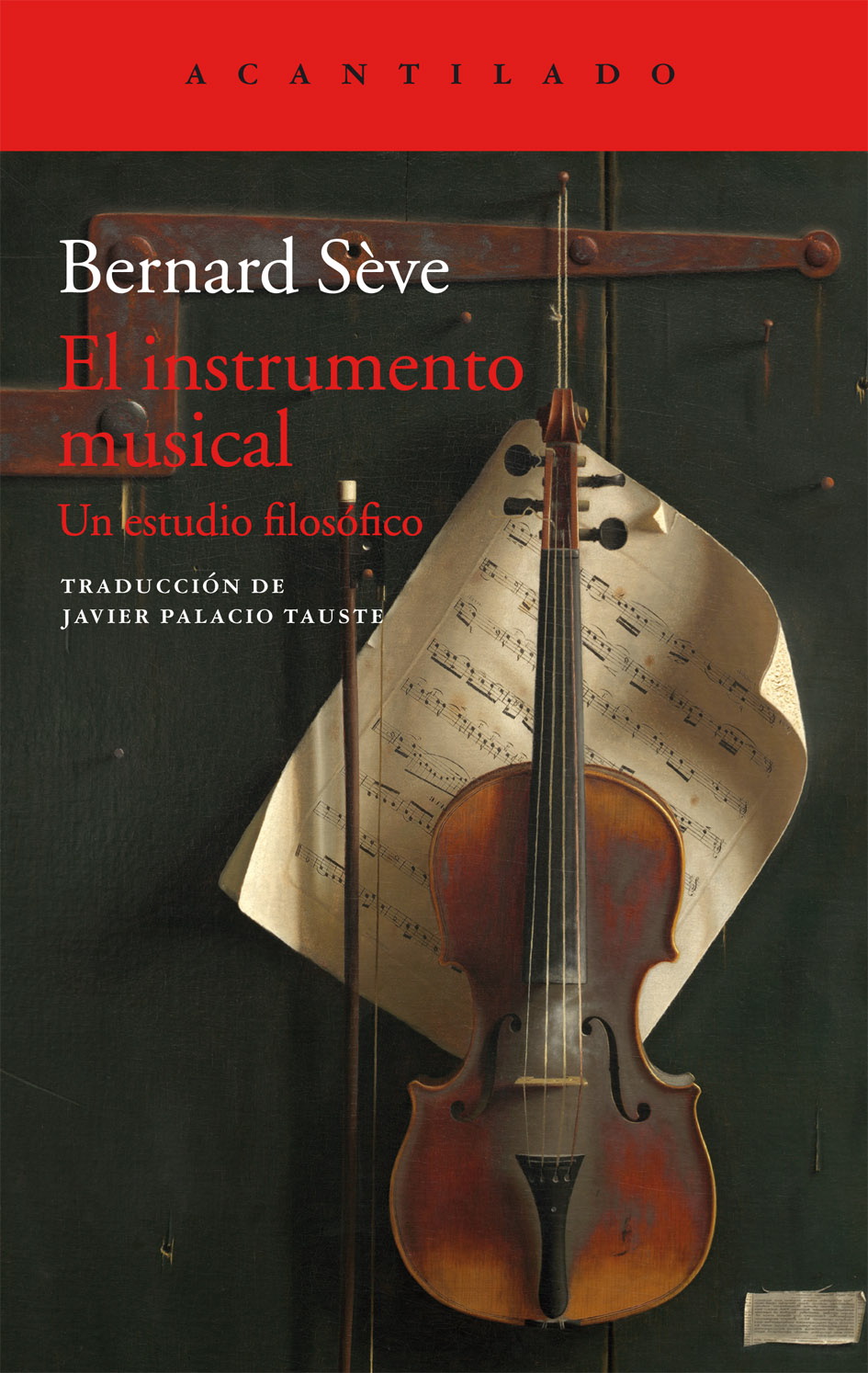
El instrumento musical, un estudio filosófico (Barcelona, Acantilado 2018), principalmente.

TODOS LOS PODERES A LA IGLESIA:

LINK

https://www.elmundo.es/papel/futuro/2018/12/21/5c17d84721efa006668b4604.html


MARC PARMENTIER. “Introduction à l’Essai sur l’entendement humain. BLOG DE FILOSOFÍA DE CAYETANO ACUÑA.

 MARC PARMENTIER


MARC PARMENTIER


Parmentier, M.

“Introduction à l’Essai sur l’entendement humain” / Marc Parmentier. – Philopsis. Posted 6 décembre 2018. – 106 pages. –

Available online at: http://www.philopsis.fr/spip.php?article423 [viewed 17 December 2018]

A partial digital edition of a work originally published in 1999.

Parmentier, M.

“Présentation de l’Essai sur l’entendement humain” / Marc Parmentier. // IN: Philopsis. Posted 26 novembre 2018.

Available online at: http://www.philopsis.fr/spip.php?article422 [viewed 17 December 2018]

LINK

https://openpublishing.psu.edu/locke/bib/ch3-18.html

https://www.cambridge.org/core/journals/dialogue-canadian-philosophical-review-revue-canadienne-de-philosophie/article/abs/introduction-a-lessai-sur-lentendement-humain-de-lockeparmentiermarc-collection-les-grands-livres-de-la-philosophie-paris-presses-universitaires-de-france-1999-viii-317-p/D37172290FF0A0A44AC75B815A65BB4F

En esta obra, Marc Parmentier emprende un estudio de los Nuevos Ensayos , cuya originalidad consiste tanto en no adoptar el punto de vista leibniziano solo como en tener en cuenta la diversidad de los objetos filosóficos discutidos en esta obra monumental. La tesis central que guía al autor en este empeño es la siguiente: los Nuevos Ensayos no debe leerse como un simple diálogo filosófico, sino más bien como una "intriga filosófica". 

Permite sostener el carácter literario de la obra, y así aprehender todos los "recursos retóricos" con los que Leibniz logra, por un lado, traducir los conceptos lockianos a su propio léxico filosófico, y, por el otro, para escenificar la conversión de un personaje, Filalethes, que defiende la causa leibniziana al final de la obra. 

Es a la luz del estudio de estrategias tan dramáticas que los dos personajes de ficción, Filaleto y Teófilo, ya no pueden ser percibidos como meros portavoces dóciles de los dos verdaderos filósofos, Locke y Leibniz. Con mayor motivo, la sucesión de sus puntos de vista falsamente simétricos no debe reducirse a una serie binaria de préstamos o desacuerdos. 

Porque esto sería abstenerse de medir que no se trata tanto de oponer dos formas de responder a las mismas preguntas como de articular diferentes entendimientos de los términos en los que se plantean estas preguntas.

2Gracias a esta doble perspectiva, filosófica y literaria, Marc Parmentier estudia un nuevo método de escritura filosófica: la reescritura. En efecto, si las palabras de Filalethes corresponden a las tesis de Locke, no son una simple cita (y esto incluso cuando se presentan como tales). Así, en una primera parte que trata exclusivamente de las réplicas de Filalethes, se consideran varios métodos de reescritura del Ensayo.(como simplificación, generalización, aclaración, endurecimiento - a la hora de eliminar el carácter hipotético de las tesis de Locke -, etc.). 

A veces, la simple inmersión de las palabras de Locke en un contexto diferente distorsiona u orienta su significado (por ejemplo, al revelar contradicciones "que surgen sólo desde el punto de vista leibniziano", p. 78). 

Así, el autor aborda las cuestiones específicas del texto de Locke mientras estudia la importancia de las respuestas de Filaleto en la economía de la obra leibniziana. 

Sin esta restitución, las discusiones del Libro III sobre la esencia real y nominal permanecerían inaudibles, o incluso la forma en que, para Locke, los "objetos" del pensamiento permanecen inseparables de las operaciones del entendimiento. mientras que Leibniz los sostiene por el contrario como la marca de la anterioridad de la idea en relación con el pensamiento. 

Así, un buen número de conceptos lockianos cuya relevancia es subrayada por Théophile se utilizan contra Locke,a través de su reinscripción en un contexto determinado por los requisitos epistemológicos o metafísicos propios de Leibniz.

3En una segunda parte, se analizan las líneas de Teófilo y todos los procesos mediante los cuales Leibniz desacredita (en particular en tono condescendiente), traduce a su propio lenguaje conceptual, o por el contrario fuerza el acuerdo con las tesis lockianas (que pueden participar en su estrategia global: escenificar la conversión de Filalethes al leibnizianismo). 

Muchas de estas reescrituras son demasiado significativas para ser siempre involuntarias: de ahí la traducción de "sustancia" en "ser sustancial" cuando se trata de la esencia real de los cuerpos (libro III), o de la reflexión como acceso al conocimiento de la naturaleza. de la mente, y no de sus operaciones (Libro II). 

Al final de este capítulo, Marc Parmentier cuestiona brevemente la forma en que los Nuevos Ensayos ofrecer acceso al sistema leibniziano (y qué modificaciones imponen la presentación pedagógica y la introducción gradual de los conceptos centrales del leibnizianismo), p. 117 y siguientes.

4En una tercera y última parte, más importante, se consideran las diferentes “redes conceptuales y temáticas” de los Nuevos Ensayos según se sitúen en el terreno neutral del innato, en el terreno lockiano (cuando se trata en particular de las ideas o el papel del lenguaje para el conocimiento), o finalmente en el campo del conocimiento (antropológico, matemático, teológico, etc.) donde Teófilo impone sistemáticamente a un Filaleto cada vez más convencido por las tesis leibnizianas del peso de su erudición.

El autor también estudia en esta parte la incorporación del malestarLocke en el léxico de las pequeñas percepciones (y por lo tanto el ocultamiento de la dimensión negativa y dolorosa de la preocupación) que las divergencias Locke / Leibniz sobre la cuestión de las probabilidades. Esta preocupación por la exhaustividad es el corolario de una decisión explícitamente aceptada: si podemos discernir acertadamente una serie de “puntos neurálgicos” alrededor de los cuales se vinculan principalmente los enfrentamientos, no deberíamos intentar leer todas las tesis. 

Nuevos ensayos filosóficos como las repercusiones de una única problemática central (por ejemplo, la del socinianismo estudiada por Nicholas Jolley), bajo pena de subestimar la originalidad del tratamiento de objetos irreductibles entre sí (de ahí el tratamiento de la medicina o las lenguas en los libros III y III). IV, o incluso la compleja conceptualización de la identidad personal, que no puede reducirse a una simple integración de la "conciencia" lockiana en la red conceptual de sustancia y pequeñas percepciones).

PARA CITAR ESTE ARTÍCULO

Referencia electrónica

Raphaële ANDRAULT , “Marc Parmentier, Leibniz-Locke, una intriga filosófica. Los nuevos ensayos sobre el entendimiento humano , París, Presses Universitaires Paris Sorbonne, 2008, 283 páginas, 16 € », Astérion [Online], 7 | 2010, publicado el 1 de septiembre de 2010, consultado el 18 de octubre de 2021. URL:

LINK

 http://journals.openedition.org/asterion/1675;

DOI: https://doi.org/10.4000/asterion.1675

LINK

https://journals.openedition.org/asterion/1675

Encabezado de pagina

Raphaële ANDRAULT

Leibniz y lo virtual

Reseña Fr En

Compte tenu de l’attention accordée par certains lecteurs et commentateurs à la notion de virtualité dans la philosophie leibnizienne, l’objectif de l’article est de repérer les occurrences du terme « virtuel » dans les textes de Leibniz, tant dans des contextes philosophiques que scientifiques (logique, mathématique et physique). 

Cette recension fait apparaître que les occurrences du terme sont limitées et ne s’éloignent guère de ses emplois chez les auteurs scolastiques. La virtualité doit donc être plutôt rattachée à la liste des concepts réhabilités par Leibniz qu’interprétée comme une anticipation de sa signification dans la culture contemporaine.

LINK

https://isidore.science/document/10670/1.in04a3

Marc Parmentier

En Revue d'histoire des sciences 2015/2 (Volumen 68) , páginas 447 a 473

Introducción

1Gottfried Wilhelm Leibniz intentó rehabilitar varios conceptos escolásticos rechazados por sus contemporáneos. A diferencia de los de forma sustancial de la entelequia de composibilidad que obsoletos en su tiempo, el se mantuvo, la de la virtualidad es omnipresente en nuestro contexto cultural, y desde el XIX ° siglo, un número de lectores y comentaristas de Leibniz han llamado la atención sobre él  [1]

[1]

Primero debemos mencionar Maine de Biran que menciona el ... . Después de haber hecho una rápida identificación de las apariciones del término en algunos de los principales autores escolásticos, me gustaría mostrar que Leibniz rara vez lo usa y que lo hace en contextos conceptuales muy precisos.

Las potencialidades escolares

2Al contrario de lo que podría pensarse, la virtualidad no tiene su origen en el ser aristotélico potencial sino en un contexto neoplatónico. En un principio, virtualis aparece como el equivalente del genitivo: virtutis . Por tanto, significa "virtuoso", en el sentido de: "aquello que posee una virtus  ", "relativo a una virtus  ". Este término designa una cualidad moral y, en particular, la virtud cristiana, pero también, en un sentido más general, un poder, una facultad psíquica y, en particular, los poderes vegetativos, sensitivos y racionales del alma.

3Una identificación de las primeras apariciones de los términos virtualis y virtualiter revela que estos términos aparecen principalmente en el contexto de la problemática de la unidad del alma humana y de sus diferentes poderes, problemática central en el De quantitate animæ de san Agustín que busca establecer que a diferencia de una multiplicidad de partes, una multiplicidad de facultades no compromete la unidad del alma  [2]

[2]

San Agustín, Diálogos filosóficos, t. II, trad. Piedra… . Es en este contexto conceptual que nos encontramos con una instancia de la palabra, el XII ° siglo, en el Didascalion de Hugo de San Víctor (1096-1141), para el cual las tres potencias del alma (en un sentido platónico) constituyen un " ternario virtual [3]

[3]

"Así que la primera progresión del alma es aquella por la cual ...  ”.

LINK

https://www.cairn.info/article.php?ID_ARTICLE=RHS_682_0447

GEORGES CANGUILHEM: BLOG DE FILOSOFÍA DE CAYETANO ACUÑA.

 GEORGES CANGUILHEM


GEORGES CANGUILHEM


Doce años después de su famoso Ensayo sobre algunos problemas relacionados con lo normal y lo patológico (1943), el filósofo Georges Canguilhem (1904-1995) publicó un estudio de la longitud de un libro sobre la historia de un solo concepto biológico. 

En Francia, su Formación del concepto reflejo en los siglos XVII y XVIII (1955) contribuyó significativamente a definir el "estilo francés" de escribir sobre la historia de la ciencia. Fuera de Francia, el libro pasó desapercibido. Este artículo vuelve a leer el estudio de Canguilhem sobre el concepto reflejo con respecto a sus implicaciones historiográficas y epistemológicas. 

Canguilhem define los conceptos como entidades complejas y dinámicas que combinan términos, definiciones y fenómenos. Como consecuencia, la historiografía de la ciencia se convierte en una tarea bastante compleja. Debe tener en cuenta los aspectos textuales y contextuales que se desarrollan independientemente de los autores individuales. 

Además, Canguilhem enfatiza la conexión entre las actividades conceptuales y otras funciones de los individuos orgánicos en sus respectivos entornos. Como resultado, los conceptos biológicos se vinculan a una biología del pensamiento conceptual, el razonamiento analógico y la práctica tecnológica. 

El artículo sostiene que esta estructura aparentemente circular es una característica importante en el enfoque filosófico de Canguilhem sobre la historia de las ciencias biológicas.


Twelve years after his famous Essay on Some Problems Concerning the Normal and the Pathological (1943), the philosopher Georges Canguilhem (1904-1995) published a book-length study on the history of a single biological concept. Within France, his Formation of the Reflex Concept in the Seventeenth and Eighteenth Centuries (1955) contributed significantly to defining the "French style" of writing on the history of science. Outside of France, the book passed largely unnoticed.

This paper re-reads Canguilhem's study of the reflex concept with respect to its historiographical and epistemological implications. Canguilhem defines concepts as complex and dynamic entities combining terms, definitions, and phenomena. As a consequence, the historiography of science becomes a rather complex task.

It has to take into account textual and contextual aspects that develop independently of individual authors. In addition, Canguilhem stresses the connection between conceptual activities and other functions of organic individuals in their respective environments. 

As a result, biological concepts become tied to the biology of conceptual thinking, analogical reasoning, and technological practice. The paper argues that this seemingly circular structure is a major feature in Canguilhem's philosophical approach to the history of the biological sciences.

Publisher Information

The Stazione Zoologica Anton Dohrn of Naples was established in 1872 by the German scientist Anton Dohrn. It is at present a public research organization controlled by the Ministero dell'Istruzione dell'Università e della Ricerca. The Stazione Zoologica is among the top research institutions in the world in the fields of marine biology and ecology. Initiated by its founder with the mission to promote basic research by hosting scientists that needed marine organisms for their studies, it is now based on the research carried out by its own staff. 

The present mission of the Stazione Zoologica is to conduct basic research in biology with a focus on marine organisms and their biodiversity, tightly linked with studies on biological evolution and marine ecosystem dynamics, using an integrated and interdisciplinary approach. The Stazione Zoologica also supports access to marine organisms for the international scientific community and provides high-level training in its mission areas.

Rights & Usage

This item is part of a JSTOR Collection.


GEORGES CANGUILHEM

LINK

https://monoskop.org/Georges_Canguilhem

Georges Canguilhem and the Problem of Error

Authors: Talcott, Samuel

CANGUILHEM Y LA EPISTEMOLOGÍA FRANCESA.

LINK

http://www.people.fas.harvard.edu/~agoldham/articles/Canguilhem.htm


OXFORD REFERENCE

LINK

https://www.oxfordreference.com/view/10.1093/oi/authority.20110803095546161

VIDEO EN FRANCES

LINK

https://youtu.be/Oh7fq6Xgaqk

Canguilhem, The Normal and the Pathological with an Introduction by Foucault, Summary, and Notes

LINK

https://www.academia.edu/6335918/Canguilhem_The_Normal_and_the_Pathological_with_an_Introduction_by_Foucault_Summary_and_Notes

Pathic Normativity: Merleau-Ponty and Canguilhem's Theory of Norms

LINK

https://www.academia.edu/20667133/Pathic_Normativity_Merleau_Ponty_and_Canguilhems_Theory_of_Norms

//CAV

171021


jueves, 14 de octubre de 2021

Alain Badiou Ethics, An Essay on the Understanding of Evil: BLOG CAYETANO ACUÑA.

 Alain Badiou

Ethics, An Essay on the Understanding of Evil

2000


ALAIN BADIOU


The conception of ethics as the ‘ethics of the other’ or the ‘ethics of difference’ has its origin in the theses of Emmanuel Levinas rather than in those of Kant. Levinas has devoted his work, after a brush with phenomenology (an exemplary confrontation between Husserl and Heidegger), to the deposing [destitution] of philosophy in favor of ethics. It is to him that we owe, long before the current fashion, a kind of ethical radicalism.

I. Ethics according to Levinas

Roughly speaking: Levinas maintains that metaphysics, imprisoned by its Greek origins, has subordinated thought to the logic of the Same, to the primacy of substance and identity. But, according to Levinas, it is impossible to arrive at an authentic thought of the Other (and thus an ethics of the relation to the Other) from the despotism of the Same, which is incapable of recognizing this Other.

The dialectic of the Same and the Other, conceived ‘ontologically’ under the dominance of self-identity [identité-à-soi], ensures the absence of the Other ineffective thought, suppresses all genuine experience of the Other, and bars the way to an ethical opening to alterity.

So we must push thought over to a different origin, a non-Greek origin, one that proposes a radical, primary opening to the Other conceived as ontologically anterior to the construction of identity. It is in the Jewish tradition that Levinas finds the basis for this pushing over. What the Law (understood according to Jewish tradition as both immemorial and currently in effect) names is precisely the anteriority, founded in being-before-the-Same, and with respect to the theoretical thought, of the ethics of the relation to the Other, itself conceived merely as the ‘objective’ identification of regularities and identities. The Law, indeed, does not tell me what is, but what is imposed by the existence of others. This Law (of the Other) might be opposed to the laws (of the real).

According to Greek thought, adequate action presumes an initial theoretical mastery of experience, which ensures that the action is in conformity with the rationality of being. From this point of departure are deduced laws (in the plural) of the City and of action. According to Jewish ethics, in Levinas’s sense, everything is grounded in the immediacy of an opening to the Other which disarms the reflexive subject. The ‘thou [tu]’ prevails over the ‘I.’ Such is the whole meaning of the Law.

Levinas proposes a whole series of phenomenological themes for testing and exploring the originality of the Other, at the center of which lies the theme of the face, of the singular giving [donation] of the Other ‘in person,’ through his fleshly epiphany, which does not test mimetic recognition (the Other as ‘similar,’ identical to me), but, on the contrary, is that from which I experience myself ethically as ‘pledged’ to the appearing of the Other, and subordinated in my being to this pledge.

For Levinas, ethics is the new name of thought, thought which has thrown off its ‘logical’ chains (the principle of identity) in favor of its prophetic submission to the Law of founding alterity.

II. The ‘ethics of difference’


Whether they know it or not, it is in the name of this configuration that the proponents of ethics explain to us today that it amounts to ‘recognition of the other’ (against racism, which would deny this other), or to ‘the ethics of differences’ (against substantial nationalism, which would exclude immigrants, or sexism, which would deny feminine-being), or to ‘multiculturalism’ (against the imposition of a unified model of behavior and intellectual approach). Or, quite simply, to good old-fashioned ‘tolerance’, which consists of not being offended by the fact that others think and act differently from you.

The commonsensical discourse has neither force nor truth. It is defeated in advance in the competition it declares between ‘tolerance’ and ‘fanaticism’, between ‘the ethics of difference’ and ‘racism’, between ‘recognition of the other’ and ‘identitarian’ fixity.

For the honor of philosophy, it is first of all necessary to admit that this ideology of a ‘right to difference,’ the contemporary catechism of goodwill with regard to ‘other cultures,’ is strikingly distant from Levinas’s actual conception of things.

III. From the Other to the Altogether-Other

The principal—but fairly superficial—an objection that we might make to ethics in Levinas’s sense is: what is it that testifies to the originality of my devotion [dé-vouement] to the Other? The phenomenological analyses of the face, of the caress, of love, cannot by themselves ground the anti-ontological (or anti-identitarian) these of the author of Totality and Infinity.

A ‘mimetic’ conception that locates original access to the other in my own redoubled image also sheds light on that element of self-forgetting that characterizes the grasping of this other: what I cherish is that me-myself-at-a-distance which, precisely because it is ‘objectified’ for my consciousness, founds me as a stable construction, as an interiority accessible in its exteriority. 

Psychoanalysis explains brilliantly how this construction of the ego in the identification with the other—this mirror effect—combines narcissism (I delight in the exteriority of the other in so far as he figures as myself made visible to myself) and aggressivity (I invest in the other my death drive, my own archaic desire for self-destruction).

Here, however, we are a very long way from what Levinas wants to tell us. As always, the pure analysis of phenomenal appearing cannot decide between divergent orientations of thought. We need, in addition, to make explicit the axioms of thought that decide an orientation.

The difficulty, which also defines the point of application for these axioms, can be explained as follows: the ethical primacy of the Other over the Same requires that the experience of alterity be ontologically ‘guaranteed’ as the experience of a distance, or of an essential non-identity, the traversal of which is the ethical experience itself. 

But nothing in the simple phenomenon of the other contains such a guarantee. And this simply because the finitude of the other’s appearing certainly can be conceived as resemblance, or as imitation, and thus leads back to the logic of the Same. The other always resembles me too much for the hypothesis of an originary exposure to his alterity to be necessarily true.

The phenomenon of the other (his face) must then attest to radical alterity which he nevertheless does not contain by himself. The Other, as he appears to me in the order of the finite, must be the epiphany of a properly infinite distance to the other, the traversal of which is the originary ethical experience.

This means that in order to be intelligible, ethics requires that the Other be in some sense carried by a principle of alterity which transcends mere finite experience. Levinas calls this principle the ‘Altogether Other,’ and it is quite obviously the ethical name for God. There can be no Other if he is not the immediate phenomenon of the Altogether Other. There can be no finite devotion to the non-identical if it is not sustained by the infinite devotion of the principle to that which subsists outside it. There can be no ethics without God the ineffable.

In Levinas’s enterprise, the ethical dominance of the Other over the theoretical ontology of the same is entirely bound up with a religious axiom; to believe that we can separate what Levinas’s thought unites is to betray the intimate movement of this thought, its subjective rigor. 

In truth, Levinas has no philosophy—not even philosophy as the ‘servant’ of theology. Rather, this is philosophy (in the Greek sense of the word) annulled by theology, itself no longer a theology (the terminology is still too Greek, and presumes the proximity to the divine via the identity and predicates of God) but precisely, ethics.

To make of ethics the ultimate name of the religious as such (i.e. of that which relates [re-lie] to the Other under the ineffable authority of the Altogether-Other) is to distance it still more completely from all that can be gathered under the name of ‘philosophy.’

To put it crudely: Levinas’s enterprise serves to remind us, with extraordinary insistence, that every effort to turn ethics into the principle of thought and action is essentially religious. We might say that Levinas is the coherent and inventive thinker of an assumption that no academic exercise of veiling or abstraction can obscure: distanced from its Greek usage (according to which it is clearly subordinated to the theoretical), and taken in general, ethics is a category of pious discourse.

IV. Ethics as decomposed [décomposée] religion

What then becomes of this category if we claim to suppress, or mask, its religious character, all the while preserving the abstract arrangement of its apparent constitution (‘recognition of the other,’ etc.)? The answer is obvious: a dog’s dinner [de la bouillie pour les chats]. We are left with a pious discourse without piety, a spiritual supplement for incompetent governments, and cultural sociology preached, in line with the new-style sermons, in lieu of the late class struggle.

Our suspicions are first aroused when we see that the self-declared apostles of ethics and of the ‘right to difference’ are clearly horrified by any vigorously sustained difference. For them, African customs are barbaric, Muslims are dreadful, the Chinese are totalitarian, and so on. As a matter of fact, this celebrated ‘other’ is acceptable only if he is a good other—which is to say what, exactly, if not the same as us? Respect for differences, of course! But on condition that the difference be parliamentary-democratic, pro-free-market economics, in favor of freedom of opinion, feminism, the environment… 

That is to say: I respect differences, but only, of course, in so far as that which differs also respects, just as I do, the said differences. Just as there can be ‘no freedom for the enemies of freedom’, so there can be no respect for those whose difference consists precisely in not respecting differences. To prove the point, just consider the obsessive resentment expressed by the partisans of ethics regarding anything that resembles an Islamic ‘fundamentalist’.

The problem is that the ‘respect for differences’ and the ethics of human rights do seem to define an identity! And that as a result, the respect for differences applies only to those differences that are reasonably consistent with this identity (which, after all, is nothing other than the identity of a wealthy albeit declining—‘West’). 

Even immigrants in this country [France], as seen by the partisans of ethics, are acceptably different only when they are ‘integrated’, only if they seek integration (which seems to mean, if you think about it: only if they want to suppress their difference). It might well be that ethical ideology, detached from the religious teachings which at least conferred upon it the fullness of a ‘revealed’ identity, is simply the final imperative of a conquering civilization: ‘Become like me and I will respect your difference.’

V. Return to the Same

The truth is that in the context of a system of thought that is both a-religious and genuinely contemporary with the truths of our time, the whole ethical prediction based upon recognition of the other should be purely and simply abandoned. The real question—and it is an extraordinarily difficult one—is much more than of recognizing the Same.

Let us posit our axioms. There is no God. This also means: the One is not. The multiple ‘without-one’—every multiple being in its turn nothing other than a multiple of multiples—is the law of being. The only stopping point is the void. The infinite, as Pascal had already realized, is the banal reality of every situation, not the predicate of a transcendence. 

For the infinite, as Cantor demonstrated with the creation of set theory, is actually only the most general form of multiple–being [être-multiples]. In fact, every situation, inasmuch as it is, is a multiple composed of an infinity of elements, each one of which is itself a multiple. Considered in their simple belonging to a situation (to an infinite multiple), the animals of the species Homo Sapiens are ordinary multiplicities.

What, then, are we to make of the other, of differences, and of their ethical recognition?

Infinite alterity is quite simply what there is. Any experience at all is the infinite deployment of infinite differences. Even the apparently reflexive experience of myself is by no means the intuition of unity but a labyrinth of differentiation, and Rimbaud was certainly not wrong when he said: “I am another.” 

There are as many differences, say, between a Chinese peasant and a young Norwegian professional as between myself and anybody at all, including myself. As many, but also, then neither more nor less.

VI. ‘Cultural’ difference and culturalism

Contemporary ethics kick up a big fuss about ‘cultural differences. Its conception of the ‘other’ is informed mainly by this kind of difference. Its great ideal is the peaceful coexistence of cultural, religious, and national ‘communities’, the refusal of ‘exclusion’.

But what we must recognize is that these differences hold no interest for thought, that they amount to nothing more than the infinite and self-evident multiplicity of humankind, as obvious in the difference between me and my cousin from Lyon as it is between the Shi’ite ‘community’ of Iraq and the fat cowboys of Texas.

The objective (or historical) foundation of contemporary ethics is culturalism, in truth a tourist’s fascination for the diversity of morals, customs, and beliefs. And in particular, for the irreducible medley of imaginary formations (religious, sexual representation, incarnations of authority…). 

Yes, the essential ‘objective’ basis of ethics rests on vulgar sociology, directly inherited from the astonishment of the colonial encounter with savages. And we must not forget that there are also savages among us (the drug addicts of the banlieues, religious sects—the whole journalistic paraphernalia of menacing internal alterity), confronted by ethics that offers, without changing its means of investigation, its ‘recognition’, and its social workers.

Against these trifling descriptions (of a reality that is both obvious and inconsistent in itself), genuine thought should affirm the following principle: since differences are what there is, and since every truth is the coming-to-be of that which is not yet, so differences are then precisely what truths depose, or render insignificant. No light is shed on any concrete situation by the notion of the ‘recognition of the other’. 

Every modern collective configuration involves people from everywhere, who have their different ways of eating and speaking, who wear different sorts of headgear, follow different religions, have complex and varied relations to sexuality, prefer authority or disorder, and such is the way of the world.

VII. From the Same to truths

Philosophically, if the other doesn’t matter it is indeed because the difficulty lies on the side of the Same. The Same, in effect, is not what is (i.e. the infinite multiplicity of differences) but what comes to be. I have already named in that regard to which only the advent of the Same occurs: it is a truth. The only truth is, as such, indifferent to differences. This is something we have always known, even if sophists of every age have always attempted to obscure its certainty: truth is the same for all.

What is to be postulated for one and all, what I have called our ‘being immortal,’ certainly is not covered by the logic of ‘cultural’ differences as insignificant as they are massive. It is our capacity for truth—our capacity to be that ‘same’ that a truth convokes to its own ‘sameness.’ Or in other words, depending on the circumstances, our capacity for science, love, politics or art, since all truths, in my view, fall under one or another of these universal names.

It is only through a genuine perversion, for which we will pay a terrible historical price, that we have sought to elaborate an ‘ethics’ on the basis of cultural relativism. For this is to pretend that a merely contingent state of things can found a Law.

The only genuine ethics is of truths in the plural—or, more precisely, the only ethics is of processes of truth, of the labor that brings some truth into the world. Ethics must be taken in the sense presumed by Lacan when, against Kant and the notion of general morality, he discusses the ethics of psychoanalysis. Ethics does not exist. There is only the ethic-of (of politics, of love, of science, of art).

There is not, in fact, one single Subject, but as many subjects as there are truths, and as many subjective types as they are procedures of truth.

As for me, I identify four fundamental subjective ‘types’: political, scientific, artistic, and amorous [amoureux].

Every human animal, by participating in a given singular truth, is inscribed in one of these four types.

A philosophy sets out to construct a space of thought in which the different subjective types, expressed by the singular truths of its time, coexist. But this coexistence is not unification—that is why it is impossible to speak of one Ethics.

Top Posted: May 2018

Category: Essays

Source: https://www.atlasofplaces.com/essays/ethics-an-essay-on-the-understanding-of-evil/


PANORAMA DE LA FILOSOFÍA FRANCESA CONTEMPORANEA. ALAIN BADIOU. 2006 (HACE 15 AÑOS): BLOG DE CAYETANO ACUÑA

 PANORAMA DE LA FILOSOFÍA FRANCESA CONTEMPORANEA.

ALAIN BADIOU. 2006 (HACE 15 AÑOS)


https://www.revistadefilosofia.org/FilosofiaFrancesacontemporanea.pdf

Panorama de la filosofía francesa contemporánea

Versión PDF

 Panorama de la filosofía francesa contemporánea

Overview of Contemporary French Philosophy

Alain Badiou**

* Esta conferencia fue pronunciada por Alain Badiou en la Biblioteca Nacional de Buenos Aires el 1º de junio de 2004, en el Seminario sobre Filosofía Francesa Contemporánea, organizado por la Embajada de Francia en Argentina y publicado en el libro Voces de la Filosofía Francesa Contemporánea, de Miguel Abensour, Alain Badiou, Patrice Vermeren, Patrick Vauday, Geneviève Fraisse y Claude Lefort. Ediciones Colihue, Buenos Aires, 2005.

** Filósofo, dramaturgo y novelista. Profesor de la Escuela Normal Superior y Director del DEA Lugares y transformaciones de la filosofía de la Universidad de Paris VIII. Ha publicado obras como El ser y el acontecimiento y Pequeño tratado de ontología transitoria, entre otras.

Resumen

El artículo sustenta la tesis de que durante la segunda mitad del siglo XX se presentó un momento de la filosofía francesa contemporánea, comparable a los momentos griego clásico y al del idealismo alemán. Emergió entonces un programa filosófico constituido por la articulación del movimiento del concepto a la existencia, la inscripción de la filosofía con la vida moderna y las luchas políticas, la superación de la oposición entre conocimiento, acción y creación, el abandono del modelo reflexivo del sujeto y la formación de un estilo filosófico cercano al de la producción literaria.

Palabras clave: filosofía, existencialismo, operaciones metódicas, ciencia, política, literatura.

Abstract

This article states that during the second half of the 20 the century there was a moment in French contemporary philosophy, comparable to the Greek classical moment, and the German idealism. Emerged, then, a philosophical program built up from the articulation of the movement from the concept to the existence; the inscription of the philosophy to modern life and political struggles; the overcoming of the opposition among knowledge, action, and creation; the abandonment of the reflexive subject model, and the formation of a philosophical style close to literary production.

Keywords: philosophy, existentialism, methodic operations, science, politics, literature.

Quisiera hacerles algunas observaciones sobre la filosofía francesa, comenzando por una paradoja: la de que lo más universal es al mismo tiempo lo más particular. Lo que Hegel llama el universal concreto, la síntesis de lo que es absolutamente universal, que es para todos, y de lo que al mismo tiempo tiene un lugar y un momento particulares. La filosofía es un buen ejemplo; como ustedes saben la filosofía es absolutamente universal, la filosofía se dirige a todos –sin excepción– pero hay en ella fuertes particularidades nacionales y culturales. Hay lo que llamaría momentos de la filosofía, en el espacio y en el tiempo. La filosofía es una ambición universal de la razón y, al mismo tiempo, se manifiesta en momentos completamente singulares. Tomemos dos ejemplos, dos momentos filosóficos particularmente intensos y conocidos. 

Por un lado, el momento de la filosofía griega clásica, entre Parménides y Aristóteles, entre el siglo V y el III a. C., momento filosófico creador, fundador, excepcional y, en realidad, bastante breve en el tiempo. Luego tenemos otro ejemplo, el momento del idealismo alemán, entre Kant y Hegel, con Fichte y Schelling, de nuevo un momento filosófico excepcional, entre el fin del siglo XVIII y los albores del XIX, un momento intenso, creador y, también un momento breve. 

Me gustaría sostener una tesis histórica y nacional: hubo o hay, según donde me ubique, un momento filosófico francés que se da en la segunda mitad del siglo XX y que puede compararse –guardando las proporciones– con los ejemplos dados precedentemente: el momento griego clásico y el idealismo alemán. Tomemos esta mitad del siglo XX: El ser y la nada, obra fundamental de Sartre, aparecida en 1943, y los últimos escritos de Deleuze, ¿Qué es la filosofía?, que datan del inicio de los años noventa. Entre 1943 y el fin del siglo XX, se desarrolla el momento filosófico francés; entre Sartre y Deleuze, podemos nombrar a Bachelard, Merleau- Ponty, Lévi-Strauss, Althusser, Foucault, Derrida, Lacan… yo mismo, quizá… veremos. 

Mi posición particular es la siguiente: si ha habido un momento filosófico francés, tal vez sea el último representante. A este conjunto situado entre las obras fundamentales de Sartre y las últimas obras de Deleuze lo llamo filosofía francesa contemporánea y es de lo que voy a hablar. Constituye, a mi entender, un momento filosófico nuevo, creador, singular y al mismo tiempo universal. El problema es identificar este conjunto: ¿qué es lo que pasó, en Francia, en filosofía, entre 1940 y el fin de siglo? ¿Qué es lo que pasó alrededor de esta decena de nombres que he citado? ¿A qué se llamó existencialismo, estructuralismo y deconstrucción? ¿Existe una unidad histórica e intelectual en este momento? ¿Cuál? 

He aquí las preguntas que me gustaría plantearles esta noche. Lo haré de cuatro modos diferentes. A partir de la pregunta del origen: ¿De dónde viene este momento? ¿Cuál es su pasado? ¿Cuál es su nacimiento? Luego, enunciando las principales operaciones filosóficas propias de este momento del que hablo. Enseguida, intervendrá una pregunta completamente fundamental, que es el lazo de todos los filósofos con la literatura, y de modo más general el lazo entre la filosofía y la literatura, en este orden. Y en cuarto lugar, hablaré de la discusión permanente, durante todo este período, entre la filosofía y el psicoanálisis. Cuestión del origen, cuestión de las operaciones, cuestión del estilo y de la literatura, cuestión del psicoanálisis, tales serán mis medios para intentar identificar esta filosofía francesa contemporánea.

En primer lugar, entonces, el origen. Para pensar este origen, es necesario remontarse al inicio del siglo XX, donde se opera una división fundamental de la filosofía francesa: la constitución de dos corrientes verdaderamente diferentes. Doy algunas referencias: en 1911, Bergson da dos conferencias muy célebres en Oxford, publicadas luego en la antología de Bergson que tiene por título El pensamiento y lo moviente, y en 1912, al mismo tiempo, aparece el libro de Brunschvicg que se titula Las etapas de la filosofía matemática. Estas dos intervenciones filosóficas ocurren justo antes de la guerra del 14. Ahora bien, estas dos intervenciones indican la existencia de dos orientaciones extremadamente diferentes. 

En el caso de Bergson, tenemos lo que se podrá llamar una filosofía de la interioridad vital: la tesis de una identidad entre el ser y el cambio, una filosofía de la vida y del devenir. Esta orientación continuará durante todo el siglo hasta Deleuze inclusive. En el libro de Brunschvicg, se descubre una filosofía del concepto apoyada en la matemática, la posibilidad de una suerte de formalismo filosófico, una filosofía del pensamiento o de lo simbólico y esta orientación continuó durante todo el siglo, en particular con Lévi-Strauss, Althusser o Lacan.

Tuvimos a principios de siglo lo que yo llamaría una figura dividida y dialéctica de la filosofía francesa. Por un lado, una filosofía de la vida; por el otro, una filosofía del concepto. Y este problema, vida y concepto, va a ser central de la filosofía francesa, incluyendo allí el momento en el que hablo, el de la segunda mitad del siglo XX.

CONTINUAR LA LECTURA EN EL LINK

http://nomadas.ucentral.edu.co/index.php/inicio/26-jovenes-contemporaneos-entre-la-heterogeneidad-y-las-desigualdades-nomadas-23/366-panorama-de-la-filosofia-francesa-contemporanea

Qué se entiende por FILOSOFÍA POLÍTICA. BITÁCORA DE P. CAYETANO ACUÑA. 21.06.2026.

P.. CAYETANO ACUÑA VIGIL. @zIGMUNDO VIGIL Cuando nos referimos a la FILOSOFÍA POLÍTICA, yo me refiero a los siguientes CONCEPTOS:    ESTADO,...